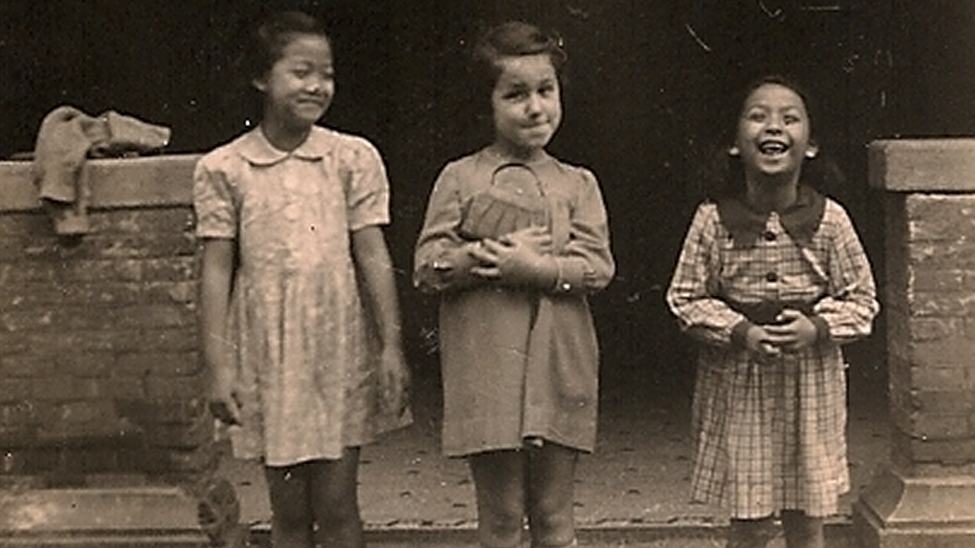
Of all the great yeshivos of Poland and Lithuania, only one came through the Second World War whole: its rosh yeshiva, its mashgiach, its rebbeim and almost all of its talmidim, together, still learning. To do it, the Mirrer Yeshiva crossed the Soviet Union by train, sailed the Sea of Japan, spent half a year in a Japanese port city and five years in Shanghai. It is one of the most improbable journeys in the history of Torah.
The yeshiva in the small town
Mir is a small town in what is today Belarus. Its yeshiva was founded in 1815, and by the 1930s it was one of the most famous in the world, drawing bochurim from America, England, Germany and South Africa as well as from Poland and Lithuania. The rosh yeshiva was Rabbi Eliezer Yehuda Finkel. The great mashgiach Rabbi Yerucham Levovitz had shaped a generation before his passing in 1936, and Rabbi Yechezkel Levenstein would carry the mussar of Mir into the war years.
In September 1939 Germany invaded Poland from the west and the Soviet Union from the east. Mir fell to the Soviets. The yeshiva knew what Communist rule meant for Torah, and when the Soviets handed the city of Vilna to independent Lithuania that October, the whole yeshiva moved there, and then on to the Lithuanian town of Keidan and the villages around it. For a few months, neutral Lithuania was the last free place for the yeshivos of Poland.
The trap closes
In the summer of 1940 the Soviet Union swallowed Lithuania too. The yeshivos faced a choice that was no choice: stay and be dissolved, their bochurim drafted or exiled to Siberia, or find a way out of a country surrounded by the Soviet Union on one side and Nazi Germany on the other.
The way out came from two diplomats in Kovno, the Lithuanian capital.
Two consuls and a destination nobody meant to reach
The first was Jan Zwartendijk, the acting consul of the Netherlands. Asked by Jewish refugees for help, he wrote in their documents that no entry visa was required for the Dutch Caribbean colony of Curaçao. It was technically true and practically meaningless, since the governor of Curaçao had to give permission to land. But it was a destination on paper.
The second was Chiune Sugihara, the consul of Japan. With a final destination written in their passports, refugees could ask him for a Japanese transit visa. In July and August of 1940, against the instructions of his own foreign ministry, Sugihara wrote them by hand, hour after hour, for weeks. He kept writing as he packed to leave, and by the accounts of witnesses he was still handing visas through the window of his train as it pulled out of the station. The visas he issued, many covering whole families, saved thousands of people.
Among them were the bochurim and rebbeim of the Mirrer Yeshiva. They needed something else as well: Soviet exit permits and tickets for the Trans-Siberian Railway, paid for in American dollars. Money came from Jewish organizations abroad, and the permits came, against all expectation, from the Soviet authorities themselves.

Across Siberia
The journey took about ten days by train from Moscow to Vladivostok on the Pacific. The bochurim davened in the train cars and learned on the benches. At the far end, ships carried them across the sea to the Japanese port of Tsuruga, where the townspeople still remember the arrival of strangers with beards and black hats. From there they went to Kobe.
Kobe had a small Jewish community, mostly merchants from Russia and the Middle East, and it took the refugees in. For about half a year, from late 1940 into 1941, the Mirrer Yeshiva learned in Kobe, Japan. Local Japanese were curious and mostly kind. There were questions to resolve that no one in Mir had ever had to ask, among them where the date line fell for Shabbos and Yom Kippur in a country on the edge of the Pacific, and the gedolim in Eretz Yisroel were consulted.
The city that asked no questions
In the late summer and autumn of 1941, months before Pearl Harbor, the Japanese government moved the refugees out of Japan to Shanghai, which Japan then largely controlled. Shanghai had become a refuge for an unusual reason: for years it was one of the very few places in the world that a Jew fleeing Europe could enter without a visa. By the time the Mir arrived, something like twenty thousand Jewish refugees from Germany, Austria and Poland were living there, many in desperate poverty.
The yeshiva found a home in the Beth Aharon synagogue, built some years earlier by the wealthy Baghdadi Jewish businessman Silas Hardoon. The story told in Mir is that the building, which had stood mostly empty, held almost exactly the number of seats the yeshiva needed, as if it had been built for them.

Learning by the Pacific
The months in Kobe were an island of calm. The bochurim rented rooms around the city and learned in a building the local community made available, and the sounds of Gemara and mussar rang out in a Japanese port for the first time in history. Japanese neighbors watched with curiosity. Some came to listen. The local police kept an eye on the strangers but did not harm them.
The halachic questions were new. Japan lies far to the east of Eretz Yisroel, and the question of where the halachic date line runs decided which day was Shabbos and, in the autumn of 1941, which day was Yom Kippur. The question was sent to the gedolim of Eretz Yisroel. The Chazon Ish held that the halachic date line lies ninety degrees east of Yerushalayim, a view that put Japan’s calendar day in question, and the episode is discussed in the poskim to this day. A yeshiva that had never left Belarus was suddenly answering questions about the far side of the world.
There were also lighter moments. The bochurim saw the sea, the mountains and the cherry trees of Kobe, and tasted foods they had never imagined. Many would later say that the months in Japan were the last calm before the hardest years of their lives.
Five years of Torah in a ghetto
In February 1943, under German pressure, the Japanese authorities ordered the stateless refugees who had arrived after 1937 into a restricted area in the district of Hongkew. It was not a death camp, and it was not the ghettos of Europe, but it was crowded, hungry and disease-ridden, and people needed passes to leave it. American bombing raids late in the war killed refugees too.
Through it all the yeshiva learned. There were not enough seforim for hundreds of bochurim, so the yeshiva printed its own: Gemaras, Rishonim, works of mussar, reproduced in Shanghai and passed from hand to hand. Money and food came at great risk from the Vaad Hatzalah in America, led by rabbis who lobbied, borrowed and in some cases bent the rules to keep the yeshivos alive.
Inside Beth Aharon the sound of learning did not stop. It is said that the mussar talks of Rabbi Chatzkel Levenstein in Shanghai were as intense as anything heard in Mir, and that the shiurim of Rabbi Chaim Shmuelevitz, who led the yeshiva there, set a standard his talmidim carried for the rest of their lives.
Afterward
When the war ended, the yeshiva learned what had happened in Europe. The town of Mir, its families and the communities its bochurim had come from were gone. In 1946 and 1947 the yeshiva left Shanghai, most of it for the United States and Eretz Yisroel. Rabbi Eliezer Yehuda Finkel, who had reached Eretz Yisroel during the war, had already reestablished the Mirrer Yeshiva in Yerushalayim, and another branch grew in Brooklyn.
The Mir in Yerushalayim today is one of the largest yeshivos in the world, with thousands of talmidim. Its existence is a direct line back to the train cars of the Trans-Siberian and the benches of Beth Aharon.
Chiune Sugihara lost his diplomatic career after the war. He lived quietly in Japan and was recognized by Yad Vashem as one of the Righteous Among the Nations in 1985, the year before he died. Jan Zwartendijk was recognized as well.
If you go
Shanghai: the Beth Aharon synagogue was torn down in 1985, but the Ohel Moshe synagogue in the old Hongkew district, used by the refugee community, is now the Shanghai Jewish Refugees Museum, with the names of the refugees on its walls. Chabad runs Shabbos, kosher food and a mikveh in Shanghai.
Kobe: the Jewish Community of Kansai still has its synagogue, Ohel Shelomo, and Chabad is in Kobe, Osaka and Tokyo. In Tsuruga, the Port of Humanity museum tells the story of the ships that brought the refugees ashore.
Kaunas, Lithuania: the Sugihara House, the former Japanese consulate where the visas were written, is a museum. Chabad of Lithuania serves Vilnius and Kaunas.
Plan the trip in the Shabbos Away app, with candle lighting in each city and the nearest Chabad on every stop.
Why it matters
A yeshiva is not a building; it is a chain of teachers and students. The Mir carried its chain across Siberia, over the sea, and through a war that destroyed nearly everything else around it, and it never stopped learning along the way. Every talmid who walks into the Mir in Yerushalayim today is part of a story that passed through Kobe and Shanghai, and through a Japanese consul’s tired hand writing visas through the night.
Go see it
Shanghai. Plan the trip in the app, with candle lighting, the nearest kehillah and a Shabbos check on the way.
Header image: Photo: Unknown authorUnknown author, Public domain, via Wikimedia Commons, source and license.
Keep reading
 The Torah scrolls of the Chinese Jews
 The ghetto took its name from a foundry
 The Jewish republic in Siberia with Yiddish on the train station
 Let’s travel today: Prague
 Let’s travel today: Tzfat
 U.S. and Israel Said to Be Drawing Up Plans for Renewed Strikes on Iran After Midterms
Leave a Reply