On a hill in Bnei Brak stands one of the largest yeshivos in the world. Every day, thousands of bochurim and avreichim learn in its great beis medrash. On Yom HaAtzmaut, for decades, the flag of the State of Israel flew over its roof. The yeshiva carries the name of a town in Lithuania where, in the summer of 1941, almost every Jew was murdered, among them the students and teachers of the yeshiva that once stood there, and the family of the man who would build it again in the Land of Israel.
This is the story of Ponevezh.
A town in Lithuania
Panevėžys, which the Jews called Ponevezh, is a town in northern Lithuania, on the Nevėžis River. Before the war, Jews were a large part of its population, perhaps a third or more of the town, with shuls, schools, shops, workshops and the institutions of a proud and learned community. Ponevezh was a town of Torah in a country of Torah. Lithuanian Jewry, the world of the Vilna Gaon and Volozhin, of Slabodka, Telz and Kelm, was for a century the heart of the yeshiva world.
A yeshiva was established in Ponevezh early in the twentieth century, and under Rav Yitzchak Yaakov Rabinowitz, known throughout the Torah world as Reb Itzele Ponevezher, it became a place of serious learning. Reb Itzele was one of the great lamdanim of his generation, a sharp and original thinker whose shiurim drew talented bochurim. He died in 1919, in the upheaval that followed the First World War.
The Ponevezher Rav
In 1919, the community chose as its rav a young gaon from the town of Kuliai, Rav Yosef Shlomo Kahaneman. He would be known for the rest of his life simply as the Ponevezher Rav.
He was a builder. In a town still recovering from war and expulsion, he rebuilt the yeshiva and created around it a whole world of Torah institutions: a yeshiva ketana for younger boys, schools for children, a home for orphans, and the great yeshiva itself, which drew bochurim from across Lithuania and beyond. He was elected to the Lithuanian parliament as a representative of the religious Jews, and he spoke for his people with dignity and courage. He traveled tirelessly to raise money, and he spoke of Torah with a warmth that drew people who had never set foot in a yeshiva.
Through the 1920s and 1930s, the Ponevezh yeshiva grew. Its bochurim learned day and night, and its graduates became rabbanim and roshei yeshiva across the Jewish world.

1940 and 1941
In June 1940, the Soviet Union occupied Lithuania. The Communist authorities moved against religious institutions, and the yeshivos faced closure and persecution. That year, the Ponevezher Rav traveled to Eretz Yisroel, intending to return.
He could not. On June 22, 1941, Germany invaded the Soviet Union, and within days its armies swept through Lithuania. What followed in Lithuania was among the fastest and most complete destructions of any Jewish community in Europe. German units, joined by Lithuanian collaborators, began murdering Jews in the first weeks of the occupation.
In Ponevezh, the Jews were forced into a ghetto in July 1941. In August, the Jews of the town and the surrounding villages were taken to the Pajuostis forest outside the town and murdered there, thousands of men, women and children over a few days. Among them were the students who remained at the yeshiva, its teachers, and the family of the Ponevezher Rav, his wife and most of his children, who had stayed behind in Lithuania.
Of the great world of Lithuanian Jewry, more than nine in ten were murdered in the Holocaust. The Ponevezh yeshiva in Lithuania was gone.
A dream on a hill in Bnei Brak
The Ponevezher Rav was in Eretz Yisroel, alone, having lost most of his family, his community and the yeshiva he had built. He might have broken. Instead, he built again.
In 1942, when the armies of Rommel were advancing across North Africa toward Egypt and many feared that Eretz Yisroel itself would fall to the Germans, the Ponevezher Rav was looking for land in Bnei Brak. People who saw him told of their astonishment: who buys land when the enemy may be at the gates? He answered that the Jewish people would remain in the land, and that Torah would be rebuilt in it.
He founded Batei Avos, a home for orphaned children, among them refugee children who had reached Eretz Yisroel after wandering across the Soviet Union and Iran, the children known as the Yaldei Tehran. And in 1944, on a hill in Bnei Brak, he opened the Ponevezh yeshiva again.
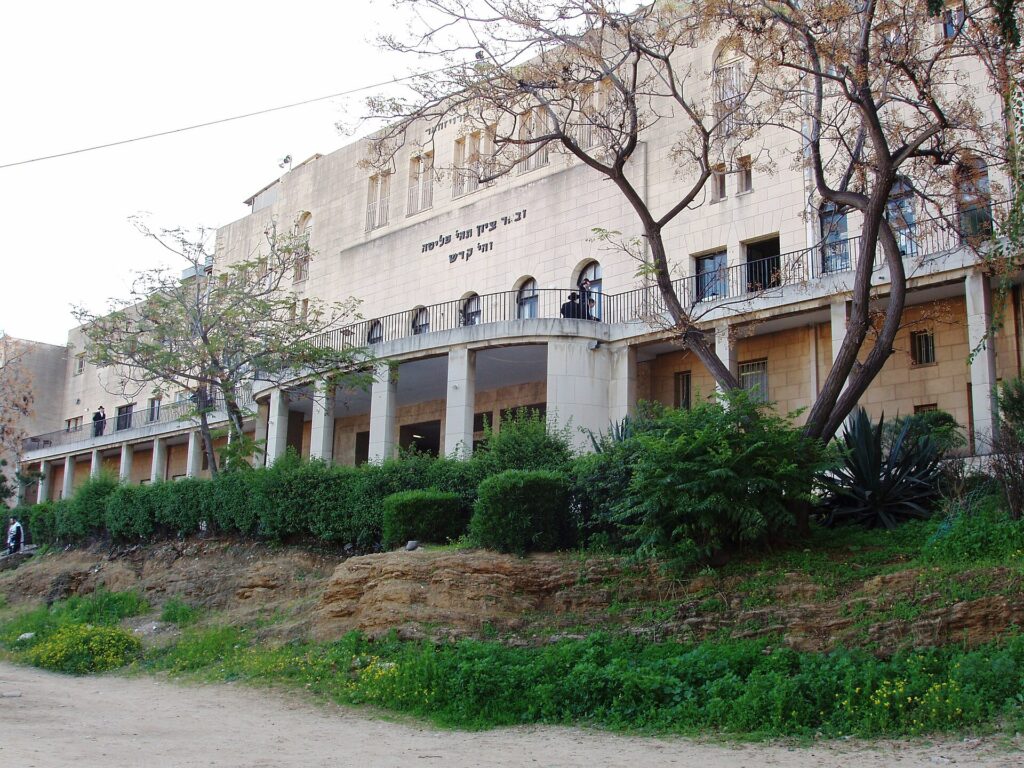
The yeshiva in Eretz Yisroel
The new Ponevezh grew into one of the greatest yeshivos in Jewish history. Its roshei yeshiva included giants of Torah: Rav Elazar Menachem Man Shach, who would lead the Torah world for a generation; Rav Shmuel Rozovsky, whose shiurim shaped the learning of thousands; and Rav Dovid Povarsky. Its mashgichim included Rav Eliyahu Eliezer Dessler, author of Michtav MeEliyahu, and Rav Yechezkel Levenstein. Bochurim came from across Eretz Yisroel and the world, and its alumni filled the yeshivos and communities of Israel and the diaspora.
The great beis medrash on the hill became a symbol: the Torah of Lithuania, which the Germans and their collaborators had tried to destroy, was alive and growing in the Land of Israel.
The flag on the roof
The Ponevezher Rav saw the founding of the State of Israel as a great kindness of Hashem to His people after the Holocaust. On Yom HaAtzmaut, for many years, he raised the flag of the State of Israel over the yeshiva. He did not change the order of tefillah for the day, and his position was his own, but the flag on the roof of Ponevezh was a sight that many remembered: a rosh yeshiva who had lost everything in Europe, honoring the Jewish state in which his yeshiva had risen again.
He spent his last decades traveling the world to raise funds, speaking to Jews everywhere of Torah, of the orphans of Batei Avos, and of the return of the Jewish people to its land. He died on 20 Elul 1969 and is buried in Bnei Brak, near the yeshiva he rebuilt.
What happened to the students
Most of the bochurim of the Lithuanian Ponevezh who were in Lithuania in the summer of 1941 were murdered, in Ponevezh or in the other towns where they were caught: the forest of Pajuostis, the forts of Kovno, the pits outside dozens of towns across the country. Few names are recorded. A handful survived in the ghettos, in hiding, in the camps, or by escaping east into the Soviet Union, and some of those survivors reached Eretz Yisroel after the war and learned again in the yeshiva on the hill in Bnei Brak.
The yeshiva remembers them. The day of the destruction of Ponevezh is remembered in the yeshiva, and the names of the town and its yeshiva are carried in the name of the great institution in Bnei Brak, so that every bochur who learns there knows where it came from.
Panevėžys today
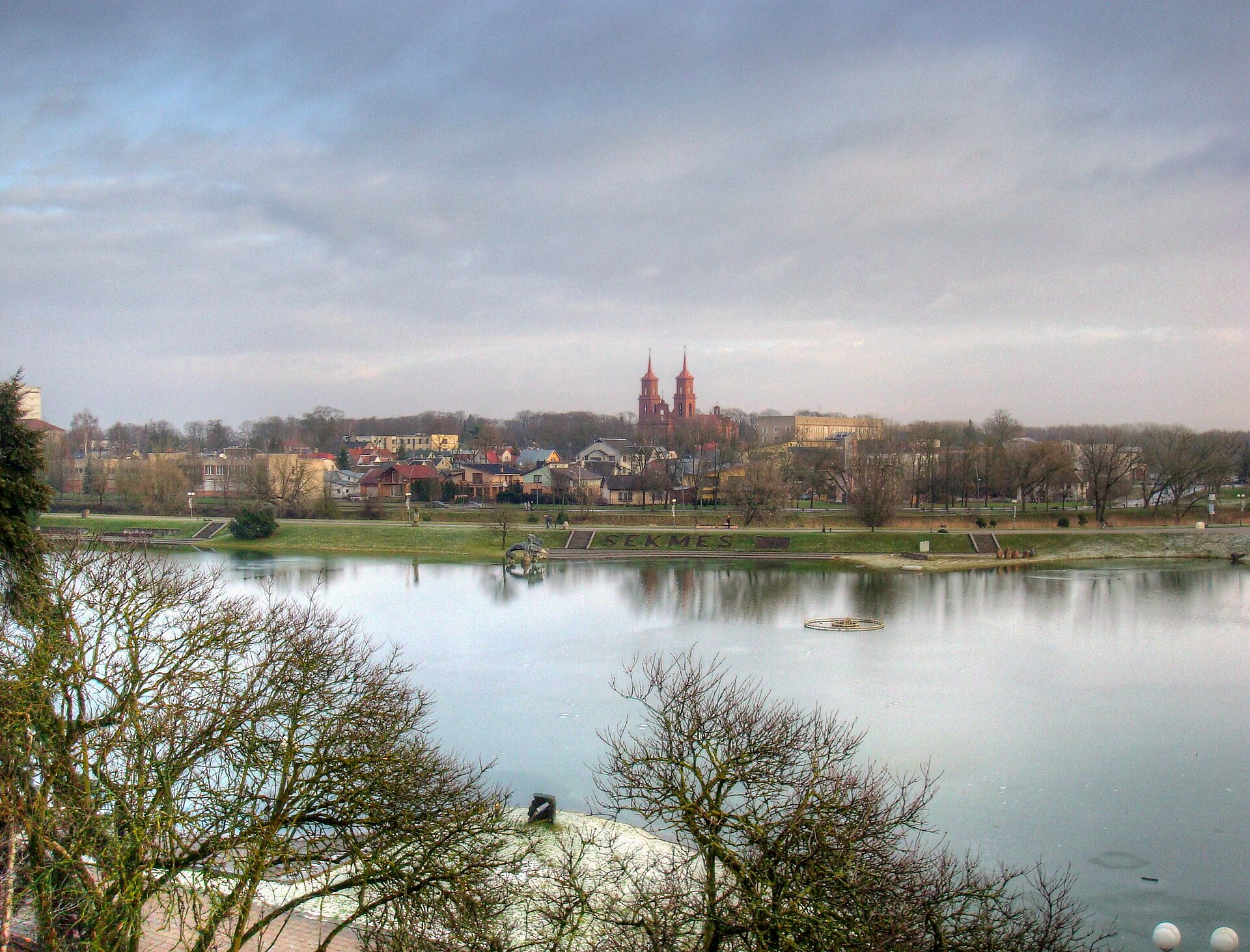
Today Panevėžys is a quiet Lithuanian city. Almost nothing remains of its Jewish life. A memorial stands in the Pajuostis forest at the site of the mass graves, and a few buildings that once belonged to the community remain in the old Jewish streets. Visitors who come to Lithuania to see the places of the great yeshivos can include Ponevezh on a route from Vilnius or Kaunas, a drive of about an hour and a half from Kaunas.
If you go
To visit the yeshiva of today, go to Bnei Brak. The Ponevezh yeshiva stands on its hill near the center of the city, and visitors who come respectfully, at the right hours and in appropriate dress, can see the great beis medrash. Bnei Brak is a few minutes from Tel Aviv, and the Shabbos Away app shows candle lighting there, the shuls and the kosher restaurants, and how to plan a Shabbos in the city.
To visit Panevėžys, fly to Vilnius or Kaunas; there is no kosher food in the town, and Chabad of Lithuania in Vilnius can help with food and Shabbos. The memorial at Pajuostis is in the forest outside the town; a local guide can help find it.
Remembering on Thursday
Every one of the great yeshivos of Europe had its own way of learning, its own melodies, its own customs and its own stories. Ponevezh had the warmth and the vision of its rav. When we remember the bochurim murdered in the forest outside the town, we also remember the beis medrash full of light on a hill in Bnei Brak, and we learn a little more l’iluy nishmasam.
Why it matters
The Germans and their collaborators set out to destroy Ponevezh, its Jews and its Torah, and in Lithuania they nearly succeeded. They did not succeed in Eretz Yisroel. A rav who had lost everything bought land on a hill while the enemy advanced, gathered orphans, opened a yeshiva and raised the flag of the Jewish state over it. Thousands learn there today. That is the answer of the Jewish people to those who tried to end it: we are still here, we are learning, and we are home.
Yeshivos of Europe appears every Thursday. Learn a perek of Mishnayos l’iluy nishmas the talmidim of Ponevezh who were murdered al kiddush Hashem.
Header image: Photo: Modris Putns, CC BY-SA 3.0, via Wikimedia Commons, source and license.
Keep reading
 Let’s travel today: Tzfat
 The ghetto took its name from a foundry
 U.S. and Israel Said to Be Drawing Up Plans for Renewed Strikes on Iran After Midterms
Leave a Reply