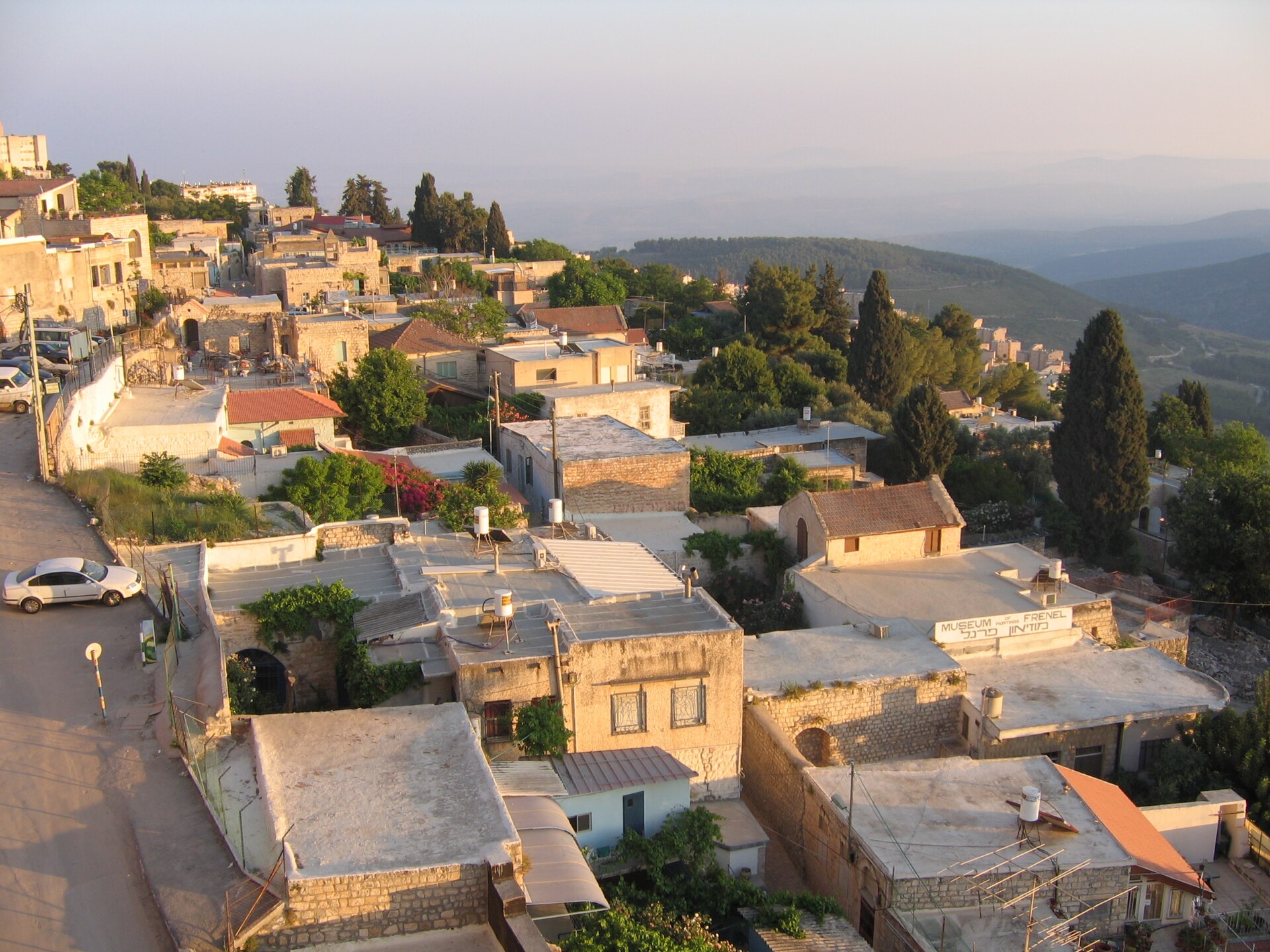
High in the hills of the Upper Galil, nine hundred meters above the Kinneret, Tzfat sits on a mountain of narrow stone lanes, blue doors and old shuls. It is one of the four holy cities of Eretz Yisroel, and in the sixteenth century it was the center of the Jewish world: the Beis Yosef wrote the Shulchan Aruch here, the Arizal taught here, and Rabbi Shlomo Alkabetz wrote Lecha Dodi here. A Shabbos in Tzfat, with the mountain air and the singing that carries through the alleys, stays with people for years.
Getting there
Tzfat is about two and a half hours by car from Yerushalayim and about two from Ben Gurion Airport, longer in traffic. Buses run from Yerushalayim, Bnei Brak and Haifa; Tzfat’s central bus station is at the top of the town, a walk downhill to the old city. A rental car is the easiest way to combine Tzfat with the kevarim of the Galil and the Kinneret below. Arrive well before Shabbos; buses stop on Friday afternoon, and the road up the mountain is slow.
The old city and the shuls of the Arizal’s generation
The old city spreads down the western slope of the mountain. Its heart is the quarter of the old shuls, many of them rebuilt after the great earthquake of 1837, which destroyed much of the town and killed thousands of its residents.
The Ari Ashkenazi shul stands on the site where, by tradition, the Arizal and his talmidim went out to greet the Shabbos. It has a carved wooden Aron Kodesh, and the community davens there to this day. Down the hill, the Ari Sephardi shul is built on the spot where the Arizal is said to have learned with Eliyahu HaNavi; a small room in its corner is pointed out as the place.
The Abuhav shul is named for Rabbi Yitzchak Abuhav, a fifteenth-century sage of Spain, and is known for its Sefer Torah, which tradition says he wrote, and for its painted dome. The Yosef Caro shul honors the Beis Yosef, who led the Tzfat community for decades; the Alsheich shul, the Chernobyl shul and others line the lanes nearby.
Visiting hours vary, and many of the shuls are active minyanim, so dress respectfully and avoid tefillah times if you are coming as a visitor. Men and women should bring head coverings and modest clothes.

The old cemetery
Below the old city, on the slope facing Meron, is the ancient cemetery of Tzfat. Here are the kevarim of the Arizal, of the Beis Yosef, of Rabbi Moshe Cordovero the Ramak, of Rabbi Shlomo Alkabetz, of the Alsheich and of many more of the great tzaddikim of the town’s golden age, along with older graves that tradition connects to much earlier figures.
The Arizal’s kever is the most visited. Near it is the mikveh of the Arizal, a spring-fed mikveh on the hillside that men use, especially on Erev Shabbos. Kohanim should ask about the paths that keep them outside the cemetery; there are areas from which one can daven without entering.
The artists’ quarter
Next to the old shuls, the former Arab quarter became an artists’ colony after 1948, and today galleries and workshops fill its stone buildings: painters, ceramicists, jewelry makers, and above all the micrography and Judaica artists for whom Tzfat is famous. Many of the shops are open on weekdays until mid-afternoon on Friday. The Tzfat candle factory, where candles are hand-dipped and sculpted into scenes from Tanach, is a favorite of children.
Meron and the kevarim of the Galil
Meron, twenty minutes west, is the resting place of Rabbi Shimon bar Yochai, whose kever is open day and night and draws visitors from around the world year round, and in vast numbers on Lag BaOmer. On the same hillside are the kevarim of Hillel and Shammai and of others. Rabbi Yonasan ben Uziel’s kever at Amuka, in the forest above Tzfat, is visited by those davening for a shidduch.
Down the mountain, Tiberias on the Kinneret holds the kevarim of the Rambam, of the Shelah HaKadosh and of Rabbi Meir Baal HaNes. A day that starts at Meron, continues to Amuka and ends at the Kinneret is one of the classic days of a Galil trip.
Nature nearby
The Galil is beautiful country. The Hula Valley reserve, north of the Kinneret, is on the migration route of hundreds of millions of birds between Europe and Africa, and in winter thousands of cranes gather there. The streams of the Upper Galil, among them the Amud stream that runs from below Tzfat toward the Kinneret, have hiking trails for families. The Golan Heights, across the Jordan River, are an easy day trip, with wineries, waterfalls and views over the whole north.
A day in the old city
Start early, before the heat and the groups. Walk down from the top of the town by the long stairway into the old city and go first to the Ari Ashkenazi shul, then down to the Abuhav and the Yosef Caro shuls, which are only a few lanes apart. Stop for coffee and a pastry at one of the bakeries along the way.
By late morning, cross into the artists’ quarter. Visit a micrography studio, where artists write whole sefarim of Tanach in tiny letters to form pictures, and the candle workshop. Have lunch at one of the small dairy restaurants with a view over the hills.
In the afternoon, walk down to the old cemetery and the kever of the Arizal, then on to the Beis Yosef and the Ramak. Men who want to toivel can visit the Arizal’s mikveh on the way back. End the day at one of the lookout points on the edge of the old city as the sun sets behind Meron, with the whole Galil spread out below.
For families, break the day with a stop at one of the playgrounds near the top of the town, and keep the walk short; the stairs are long and steep.
Where to stay
Tzfat has hotels on the top of the mountain, among them several large kosher hotels, and many guesthouses, zimmers and apartments in and around the old city. Staying in the old city means walking to the shuls and the Ari’s mikveh on Shabbos; the lanes are steep, with many stairs, so families with strollers and older travelers may prefer the hotels on top of the hill, a longer walk on Shabbos.
Ask about Shabbos arrangements before you book: a hot plate, an urn, the keys, and how far you will walk to shul.
Kosher food
Tzfat is a religious town and most food is kosher; check the certificate on the wall. The old city has small restaurants, bakeries and pizza shops, and the market street at the top of the town, Yerushalayim Street, has more. Restaurants close for Shabbos, so plan Shabbos meals with your hotel or host, or with families and organizations in the old city who host travelers.
Shabbos in Tzfat
Erev Shabbos in Tzfat begins early. In the afternoon, men walk down to the Arizal’s mikveh, and the lanes empty as candle lighting nears. Many shuls in the old city follow the custom of the Arizal’s circle, and in some, Kabbalas Shabbos is sung with great feeling, with the windows open toward the hills.
On Shabbos day, after davening, walk the quiet lanes of the old city and look out over the mountains toward Meron. In the afternoon, many travelers visit the kevarim in the old cemetery. Shabbos ends at tzeis, and the artists’ quarter often reopens on Motzei Shabbos.
When to go
Tzfat’s height makes it cooler than the rest of the country: pleasant in summer, cold in winter, sometimes with snow. Summer brings visitors and festivals; Elul and the weeks before Rosh Hashanah bring the sound of selichos at night. Lag BaOmer at Meron is an experience on its own, but plan carefully: the crowds are vast and access is managed with organized transport and permits in recent years.
A few practical points
Wear good walking shoes; the old city is steep and the stones are slippery after rain. Bring a sweater even in summer for the evenings. Parking near the old city is limited; leave the car at the top and walk down. Keep the emergency numbers, 100 for the police and 101 for Magen David Adom, in your phone, and check current security advice for the north before you go.
Many travelers come to Tzfat for a single afternoon and wish they had stayed longer. If you can, give it a Shabbos, or at least a night: the old city is at its most beautiful in the early morning and at dusk, after the day visitors have gone down the mountain.
Why go
Because in a few streets on a mountainside, within a single century, the Shulchan Aruch, the kabbalah of the Arizal and Lecha Dodi were born, and the Jewish world has been living with all three ever since. To daven Kabbalas Shabbos in Tzfat, as the sun goes down over the hills of the Galil, is to stand where that song was first sung.
This week in Tzfat
Shabbos there this week
Candle lighting 5:35 PM (20 minutes before shkiah 5:55 PM)
Shabbos ends 6:32 PM (8.5°)
Coming weeks: Oct 30: 4:28 PM · Nov 6: 4:22 PM · Nov 13: 4:17 PM
Local time (Asia/Jerusalem), sea level, NOAA. Follow your community’s luach where it differs; the app has every opinion.
Jewish life
Worth seeing: Jewish heritage within 30 km
- קבר רבי נחמיה (Synagogue, 223 m)
- ישיבת עטרת מרדכי צפת (Synagogue, 270 m)
- The Arizal (Kever, Died 1572, 283 m)
- אורות האר"י (Synagogue, 291 m)
- בית הכנסת אלחרזי (Synagogue, 292 m)
- בית הכנסת לעלוב (Synagogue, 293 m)
- בית הכנסת פאר הנצח (Synagogue, 442 m)
- בית הכנסת ערלוי (Synagogue, 459 m)
- בית הכנסת חומני עלוש (Synagogue, 475 m)
- בית הכנסת סדיגורה (Synagogue, 476 m)
- קבר נחום איש גמזו (Synagogue, 478 m)
- David's hall (Synagogue, 561 m)
Getting there
Nearest airport: TLV. Fares from New York · Search from your city · Israel Watch
Where to stay: hotels and apartments within walking distance of a shul · frum hosts on Shabbos Away
🕯️ Print Shabbos and Yom Tov times for Tzfat · Making a minyan there? Borrow a Sefer Torah from the Museum of the Scroll.
Header image: Photo: No machine-readable author provided. Beny Shlevich assumed (based on copyright c, CC BY-SA 3.0, via Wikimedia Commons, source and license.
Keep reading
 Let’s travel today: Yerushalayim
 Let’s travel today: Miami Beach
 The ghetto took its name from a foundry
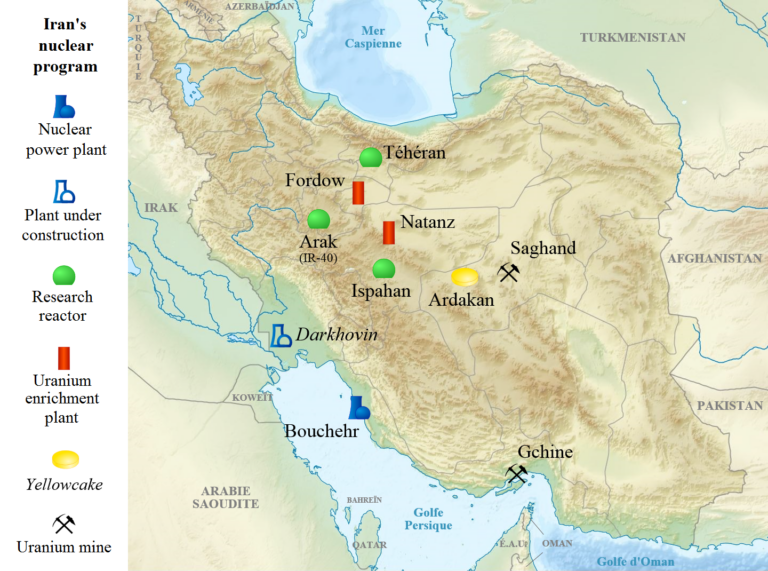 U.S. and Israel Said to Be Drawing Up Plans for Renewed Strikes on Iran After Midterms
 The bochurim who traveled from Lithuania to Shanghai
Leave a Reply