Intel's chief financial officer, David Zinsner, has estimated that shutting down the company's semiconductor factory in Kiryat Gat will cost the chipmaker roughly $300 million in the fourth quarter, according to Globes, the Israeli business newspaper. The closure follows an explosion at the site, which forced the plant offline and triggered one of the more significant disruptions to Intel's Israeli manufacturing operations in recent memory.
Globes framed the story primarily as a business and financial matter, focusing on the cost to Intel as a global chipmaker rather than on the details of the explosion itself. The $300 million figure is a fourth-quarter charge, meaning investors and analysts are already absorbing its impact on Intel's near-term earnings outlook.
The short version
- Intel CFO David Zinsner estimates the Kiryat Gat factory shutdown will cost Intel roughly $300 million in the fourth quarter.
- The shutdown was caused by an explosion at Intel's Kiryat Gat fabrication facility in southern Israel.
- The story was first reported by Globes, the Israeli business newspaper.
- Intel's Kiryat Gat plant, known as Fab 28, is one of the company's most important chip fabrication facilities worldwide.
- Intel employs more than ten thousand people across its Israeli operations.
- Kiryat Gat is a development town in the Shfela region, established in the late 1950s to house new immigrants.
Intel in Kiryat Gat: A Deep Israeli Story
For anyone who has driven south from Tel Aviv toward Be'er Sheva, the vast Intel campus on the edge of Kiryat Gat is hard to miss. The facility, known as Fab 28, is one of Intel's most important chip fabrication plants anywhere in the world, and it sits at the heart of Israel's technology economy. Intel has been present in Israel since the 1970s, making it one of the earliest and most consequential foreign technology investors in the country.
Kiryat Gat itself is a development town in the southern Shfela region, established in the late 1950s to absorb waves of new immigrants, many of them from North Africa and other Mizrachi communities. For decades the city faced economic challenges, and Intel's decision to build its fabrication plant there was seen as a transformative investment, bringing thousands of high-skilled, well-paying jobs to a community that needed them. The plant became a source of local pride and a symbol of what the State of Israel's economy could achieve.
Intel's Israeli operations are among the company's largest outside the United States. The company employs more than ten thousand people in Israel across multiple sites, including research and development centers and its manufacturing campus in Kiryat Gat. Chips designed or fabricated in Israel have found their way into computers and devices used around the world, making the Israeli operation strategically important not just to Intel but to the global technology supply chain.
The Explosion and the Shutdown
Details about the explosion that caused the shutdown have not been fully reported in the sources available to us, and we will not speculate beyond what has been confirmed. What Globes has reported, and what CFO David Zinsner has indicated, is that the incident was serious enough to require shutting down production at the Kiryat Gat plant, and that the financial cost of that shutdown is expected to reach approximately $300 million in the fourth quarter alone.
A number like $300 million reflects not just repair costs or lost equipment but the enormous cost of halted production at a world-class semiconductor fabrication facility. Modern chip fabs operate around the clock and are extraordinarily expensive to run. When a fab goes offline unexpectedly, the ripple effects include scrapped wafers, delayed deliveries, contract penalties, and the complex process of safely restarting sensitive manufacturing equipment. The figure David Zinsner cited to analysts gives a sense of just how significant the disruption has been.
What This Means for Israel's Economy
Intel is one of Israel's largest private employers and one of the country's biggest exporters. Any extended shutdown of the Kiryat Gat facility has consequences that extend well beyond Intel's own balance sheet. Thousands of workers, local suppliers, and subcontractors depend on the plant's operation, and the city of Kiryat Gat has built much of its economic identity around the Intel campus.
Israel's technology sector has shown remarkable resilience over the years, including during periods of military conflict and security pressure. The country's chipmaking and semiconductor design expertise runs deep, and the expectation among analysts watching Israel's economy is that this disruption, costly as it is, represents a temporary setback rather than a structural threat to Intel's long-term commitment to Israel. Intel has made repeated public commitments to its Israeli operations, including large investment announcements in recent years.
From a broader Zionist perspective, the Intel story in Kiryat Gat is itself a remarkable chapter in the ingathering of exiles. A development town built to house new immigrants became the site of one of the world's most advanced chip factories, staffed by Israeli engineers and workers. That story does not pause because of a factory incident; it continues, and the rebuilding and reopening of the plant will be part of it.
For the Frum Traveler: Kiryat Gat and the Southern Shfela
Kiryat Gat is not typically on the top of a frum tourist's itinerary, but it sits in a part of Israel that has a great deal to offer Jewish families. The city is located between Tel Aviv and Be'er Sheva, making it a useful stopping point on any trip through the Shfela and the Negev. The surrounding region includes sites of deep Jewish historical significance, from the ancient city of Lachish to the Elah Valley where David famously faced Goliath.
For Shabbos, frum travelers in this area typically plan around Be'er Sheva to the south, where there is an established Orthodox community with shuls and kosher food options, or head north toward the Gush Dan area. Kiryat Gat itself has a Jewish community with synagogues, and the city's population includes many traditionally observant Sephardic families whose roots in the development town go back generations. It is not a major frum tourist hub, but a traveler making a point of visiting Intel's Israel campus or the surrounding region should plan Shabbos accommodations in advance.
Kosher food in Kiryat Gat is available, as it is throughout Israeli cities, but the selection of restaurants and take-out options is more limited than in major centers like Tel Aviv, Jerusalem, or Be'er Sheva. Travelers driving through should be aware of Shabbos times in the region, which, like all of Israel, follow the local zmanim. The Shfela region in general is worth more attention from frum travelers than it typically receives: the landscape is beautiful, the history is profound, and the communities of development towns like Kiryat Gat represent the living story of the return of the Jewish people to its land.
The Wider Picture
Intel's situation in Kiryat Gat is also a reminder of how deeply integrated global technology companies have become with the Israeli economy and, by extension, with the story of the modern Jewish state. Israel is home not only to Intel's fabrication operations but to research and development centers for dozens of the world's largest technology companies. That concentration of investment reflects Israel's extraordinary pool of engineering and scientific talent, much of it drawn from universities like the Technion in Haifa and Hebrew University in Jerusalem.
For readers of Shabbos Away, the Intel story is a reminder that the Land of Israel is not only a place of ancient history and spiritual significance but a living, thriving, modern country at the frontier of human technological achievement. A $300 million setback is real and serious for the workers and families who depend on that plant. It is also, in the context of Israel's remarkable economic story, a chapter that will be written through and recovered from, as so many challenges before it have been.
If you are going
- Kiryat Gat is located between Tel Aviv and Be'er Sheva; plan Shabbos accommodations in Be'er Sheva or the Gush Dan area if visiting the region.
- Kosher food is available in Kiryat Gat but options are more limited than in major Israeli cities; plan ahead for Shabbos meals.
- The surrounding Shfela region includes historically significant sites like the Elah Valley and ancient Lachish, worth adding to a southern Israel itinerary.
- Check local zmanim for Shabbos times if driving through the Shfela, and allow extra time to reach your Shabbos destination before candle lighting.
Shabbos in Kiryat Gat · Shabbos in Be'er Sheva · Shabbos in Shfela · Shabbos in Israel · Shabbos in Negev · Open the Shabbos planner
Questions readers ask
What caused Intel to shut down its Kiryat Gat factory?
An explosion at the Kiryat Gat facility forced Intel to shut down production at the plant. The full details of the explosion have not been comprehensively reported in the sources available to us.
How much is the Kiryat Gat shutdown expected to cost Intel?
Intel CFO David Zinsner estimates the cost at roughly $300 million in the fourth quarter alone, reflecting lost production, scrapped materials, and the expense of an unplanned halt to a world-class semiconductor fab.
How important is the Kiryat Gat plant to Intel globally?
The Kiryat Gat facility, known as Fab 28, is one of Intel's most significant chip fabrication plants anywhere in the world. Intel employs more than ten thousand people across its Israeli operations, making Israel one of its most important bases outside the United States.
What does Intel's presence mean for Kiryat Gat as a city?
Kiryat Gat was established as a development town for new immigrants and long faced economic challenges. Intel's plant transformed the city's economic prospects, bringing thousands of high-skilled jobs and making the campus a central part of the city's identity.
Is this likely to affect Intel's long-term commitment to Israel?
Analysts and observers generally view this as a temporary disruption rather than a structural threat. Intel has repeatedly reaffirmed its long-term commitment to Israel, including major investment announcements in recent years.
Where should a frum traveler plan to spend Shabbos if visiting the Kiryat Gat area?
Be'er Sheva to the south has an established Orthodox community with shuls and kosher food, and the Gush Dan area to the north is another option. Kiryat Gat has shuls and kosher food but is not a major frum tourist destination, so advance planning is recommended.
{“@context”:”https://schema.org”,”@type”:”FAQPage”,”mainEntity”:[{“@type”:”Question”,”name”:”What caused Intel to shut down its Kiryat Gat factory?”,”acceptedAnswer”:{“@type”:”Answer”,”text”:”An explosion at the Kiryat Gat facility forced Intel to shut down production at the plant. The full details of the explosion have not been comprehensively reported in the sources available to us.”}},{“@type”:”Question”,”name”:”How much is the Kiryat Gat shutdown expected to cost Intel?”,”acceptedAnswer”:{“@type”:”Answer”,”text”:”Intel CFO David Zinsner estimates the cost at roughly $300 million in the fourth quarter alone, reflecting lost production, scrapped materials, and the expense of an unplanned halt to a world-class semiconductor fab.”}},{“@type”:”Question”,”name”:”How important is the Kiryat Gat plant to Intel globally?”,”acceptedAnswer”:{“@type”:”Answer”,”text”:”The Kiryat Gat facility, known as Fab 28, is one of Intel’s most significant chip fabrication plants anywhere in the world. Intel employs more than ten thousand people across its Israeli operations, making Israel one of its most important bases outside the United States.”}},{“@type”:”Question”,”name”:”What does Intel’s presence mean for Kiryat Gat as a city?”,”acceptedAnswer”:{“@type”:”Answer”,”text”:”Kiryat Gat was established as a development town for new immigrants and long faced economic challenges. Intel’s plant transformed the city’s economic prospects, bringing thousands of high-skilled jobs and making the campus a central part of the city’s identity.”}},{“@type”:”Question”,”name”:”Is this likely to affect Intel’s long-term commitment to Israel?”,”acceptedAnswer”:{“@type”:”Answer”,”text”:”Analysts and observers generally view this as a temporary disruption rather than a structural threat. Intel has repeatedly reaffirmed its long-term commitment to Israel, including major investment announcements in recent years.”}},{“@type”:”Question”,”name”:”Where should a frum traveler plan to spend Shabbos if visiting the Kiryat Gat area?”,”acceptedAnswer”:{“@type”:”Answer”,”text”:”Be’er Sheva to the south has an established Orthodox community with shuls and kosher food, and the Gush Dan area to the north is another option. Kiryat Gat has shuls and kosher food but is not a major frum tourist destination, so advance planning is recommended.”}}]}
Written by the Shabbos Away News Desk with the help of AI, from the sources above. Something wrong? Tell us.
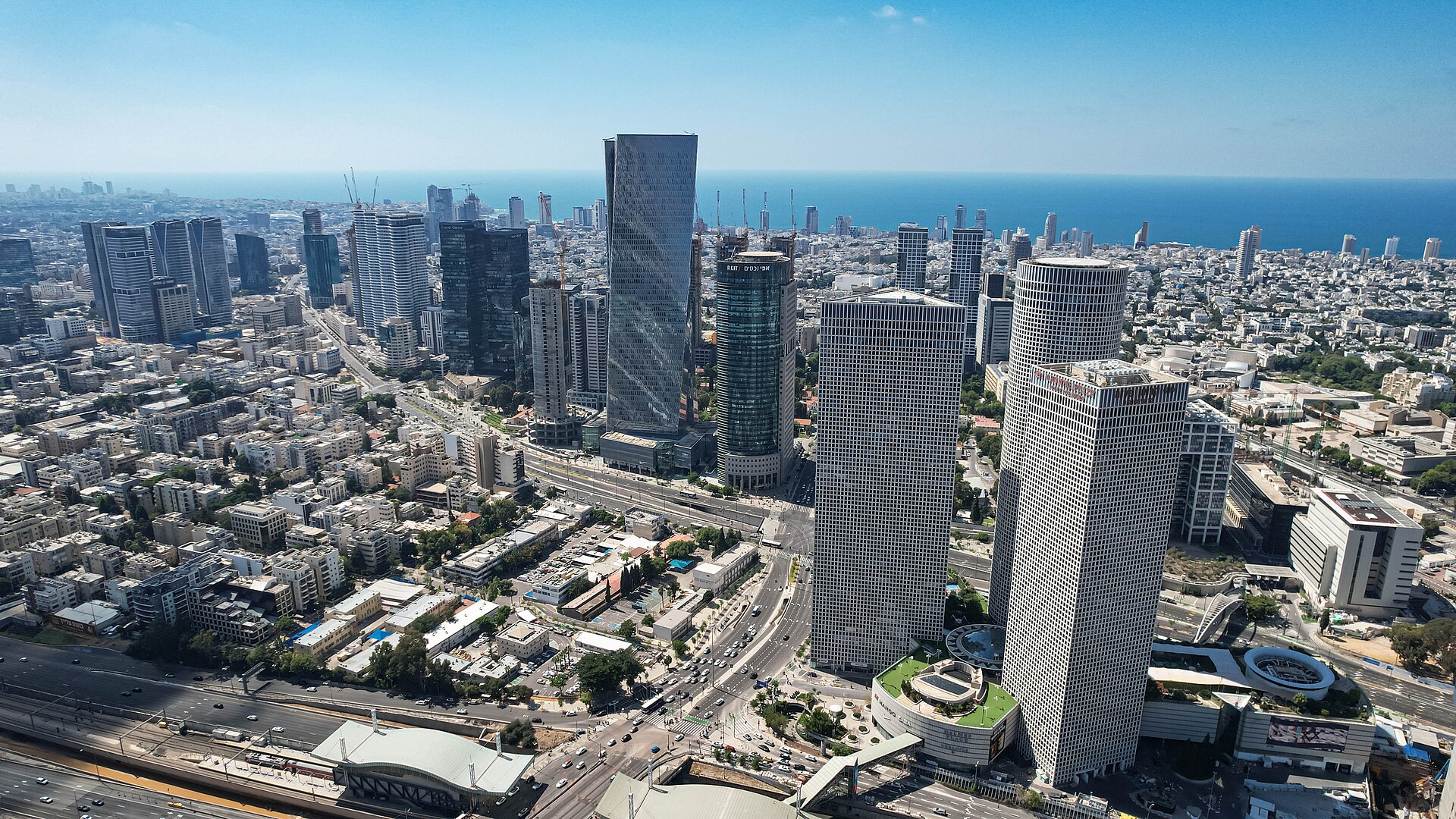
Header image: Ynhockey, CC BY-SA 4.0, via Wikimedia Commons, source and license.
